Concept of a Multichannel Loudspeaker Instrument for Electroacoustic Performance
This diploma thesis presents the conceptual development, theoretical foundation, and practical realization of a multichannel loudspeaker instrument designed for live electroacoustic performance. The project, titled Klangleinwand (“sound canvas”), explores the artistic and technical possibilities of treating a vertically arranged loudspeaker system not merely as a playback medium, but as an integral component of a musical instrument.
The work is motivated by historical precedents in spatial music, particularly Karlheinz Stockhausen’s early exploration of sound movement in space, most notably in Kontakte (1958–60). While much spatial music research and practice has focused on the horizontal plane, this thesis deliberately shifts attention to the vertical dimension of sound. By reducing spatial complexity to a two-dimensional vertical plane, the author proposes an “acoustic canvas” on which sounds can be placed, moved, and shaped, analogous to painting on a visual surface.
The thesis begins with a historical and structural overview of electronic instruments. It contrasts two major traditions: instruments that imitate acoustic models (such as early electric organs and synthesizers) and those that introduce fundamentally new playing concepts (such as the Theremin or Trautonium). A central argument is that electronic instruments differ fundamentally from acoustic ones in that their components—sound generation, modulation, amplification, and loudspeakers—can be freely recombined. This flexibility offers great creative freedom but also risks arbitrariness. To counter this, the Klangleinwand is developed according to a guiding principle: all components of the instrument must be interdependent and oriented toward spatial sound projection.
A crucial conceptual step is the redefinition of the loudspeaker. Rather than serving as a neutral reproduction device, the loudspeaker system becomes part of the instrument’s sonic identity. Drawing on examples such as guitar amplifiers and the Ondes Martenot, the thesis argues that an instrument’s sound cannot be separated from its mode of projection. In the Klangleinwand, nine vertically arranged loudspeakers form a coherent sound surface, designed to support both spatial differentiation and perceptual clarity.
The theoretical foundation of the project is rooted in psychoacoustics, particularly the localization of real and virtual sound sources. The thesis reviews established mechanisms of spatial hearing, including interaural time differences (ITD), interaural level differences (ILD), and head-related transfer functions (HRTFs). Special attention is given to the challenges of vertical localization, which relies primarily on spectral cues and is significantly less precise than horizontal localization. These limitations directly inform the design of the loudspeaker array and the spatial control tools.
Based on these considerations, the hardware concept of the Klangleinwand employs nine loudspeakers arranged in a vertical grid. This configuration minimizes reliance on phantom sources and reduces dependence on an ideal listening position (“sweet spot”). The system is conceived as a flexible, artistic setup rather than a standardized 3D audio format, allowing optimization for musical expressiveness rather than technical universality.
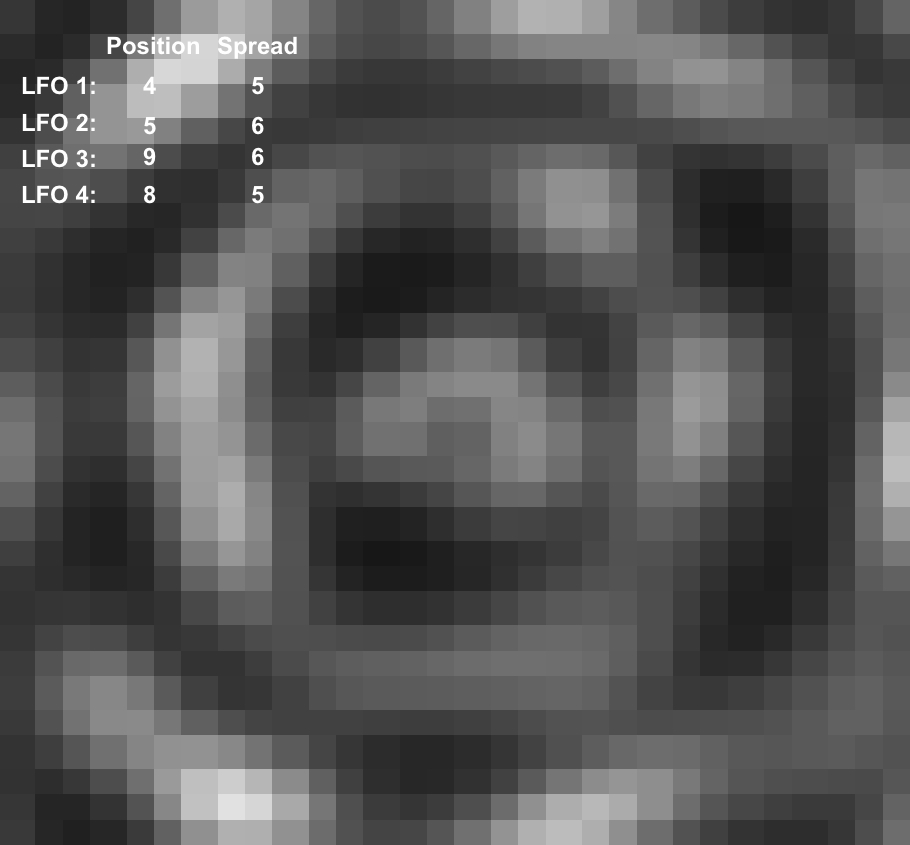
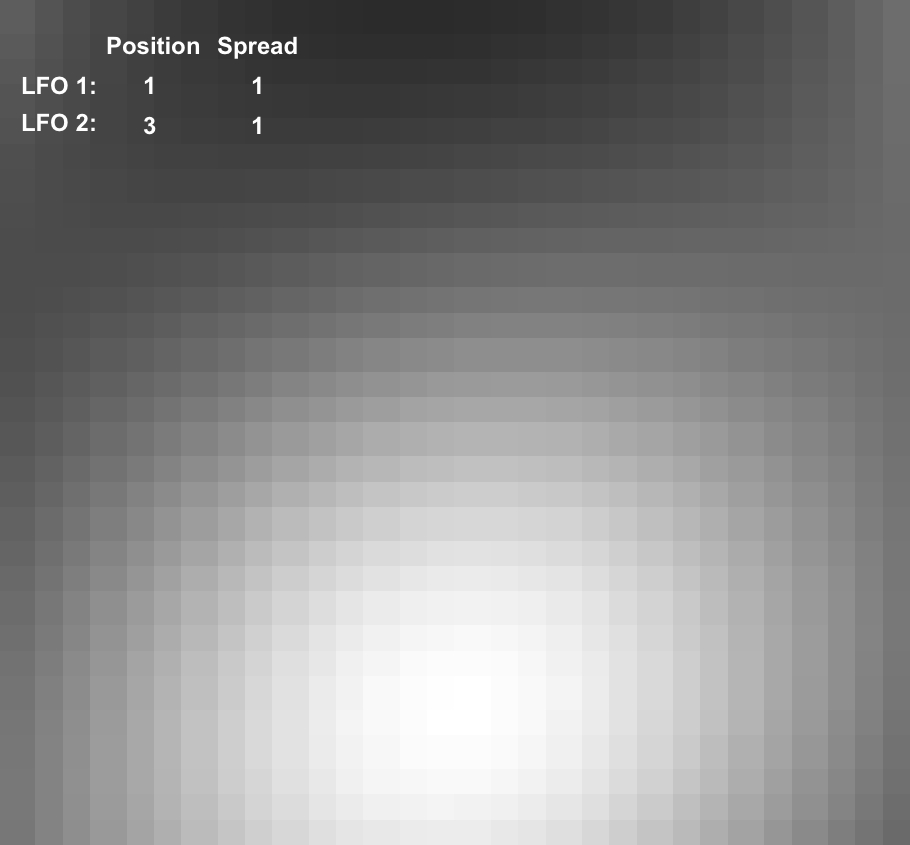
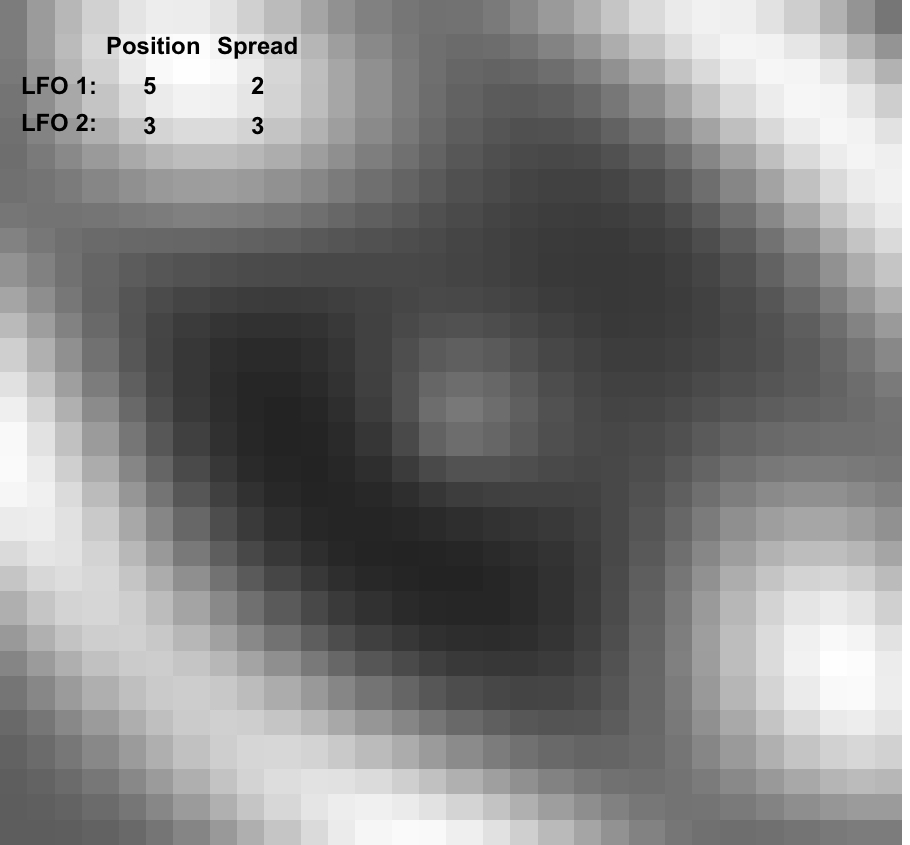
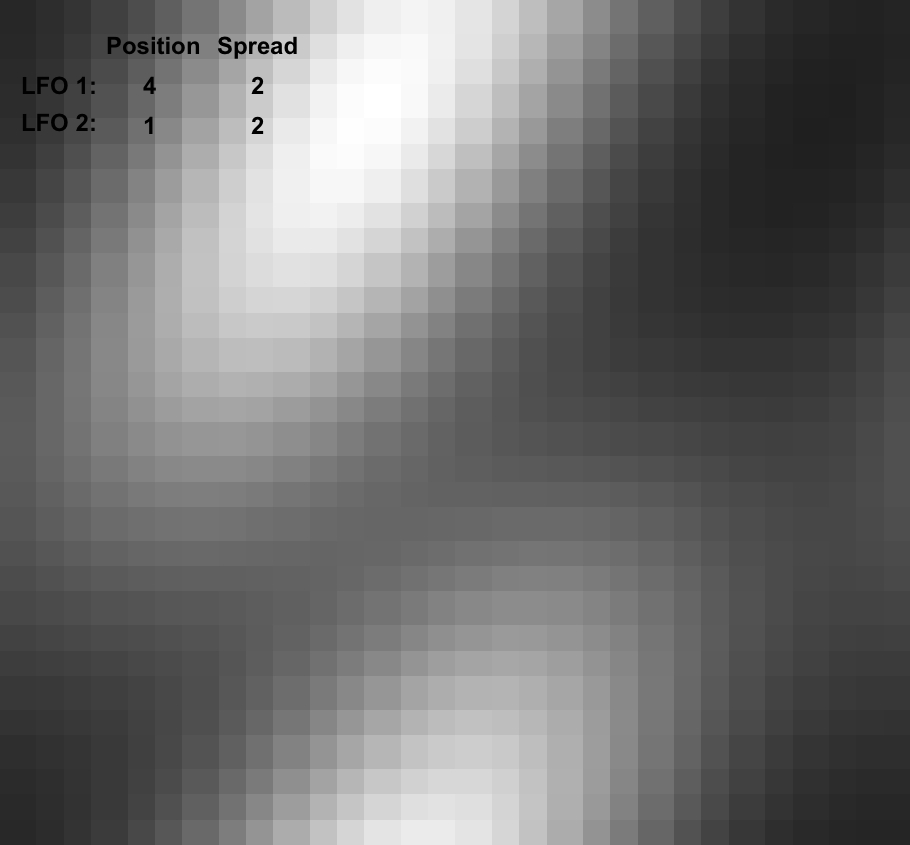
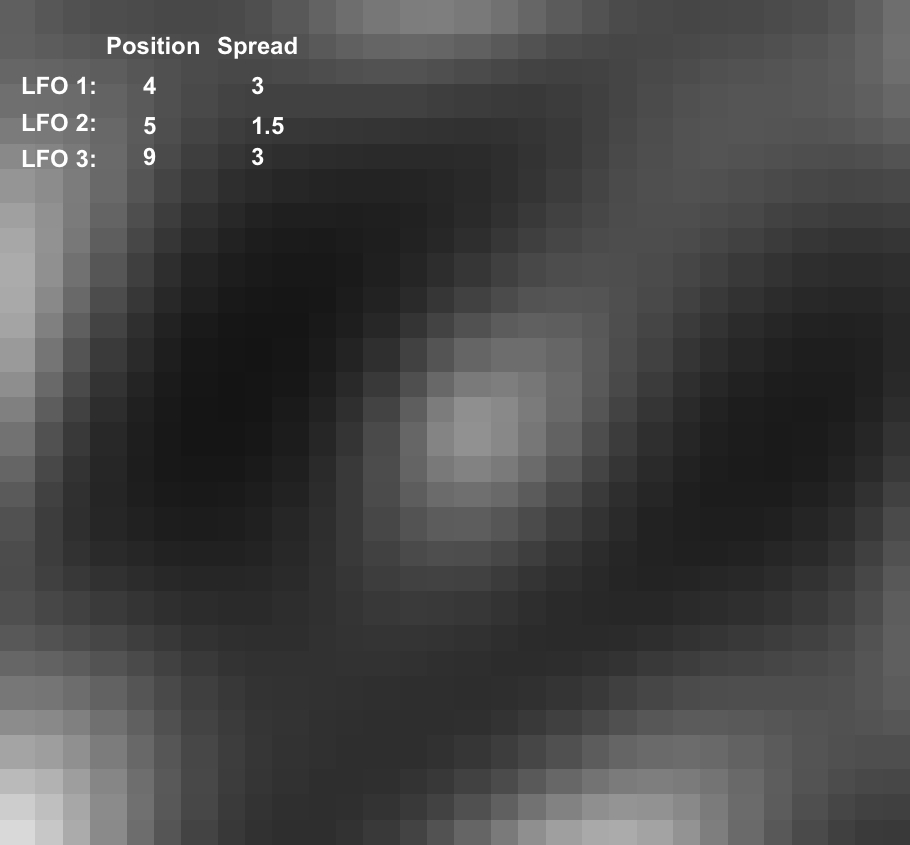
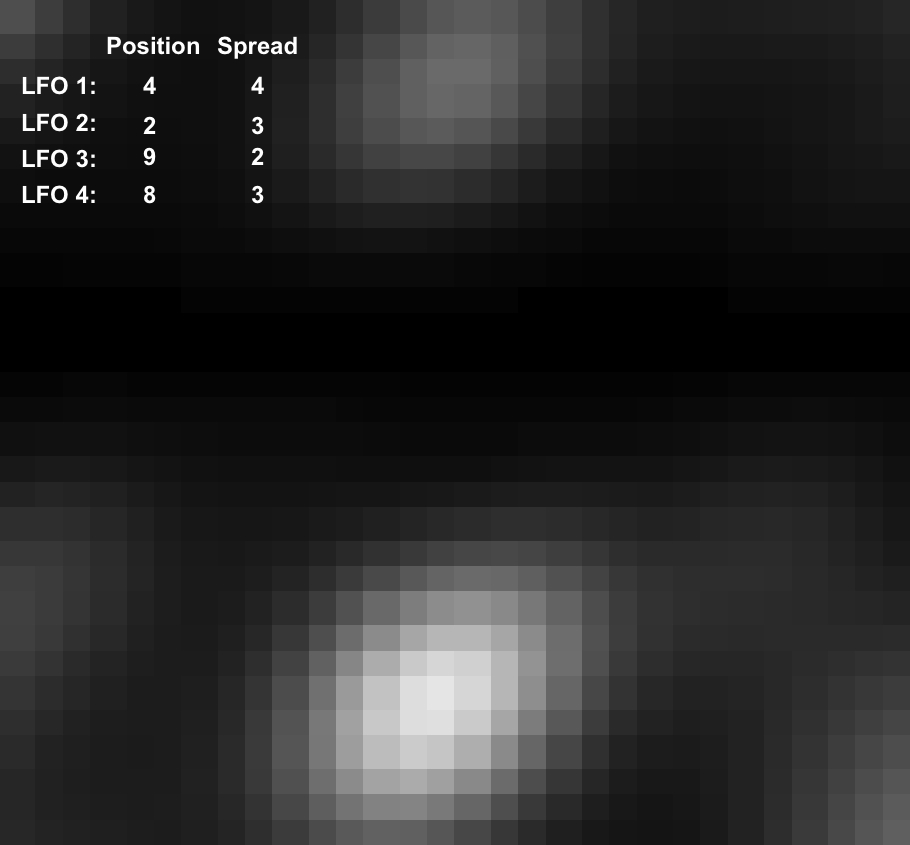
The practical realization of the instrument is implemented entirely in Max/MSP and centers on a set of custom-developed spatial tools. Key among these is the Spatial Pan, which allows virtual sound sources to be positioned anywhere on the sound canvas using vector-based amplitude panning. Complementing this is the Spatial LFO, a multidimensional modulation system that distributes low-frequency oscillations across the sound surface, creating wave-like movements and complex interference patterns.
Sound generation within the Klangleinwand follows two main approaches. The first is an anisotropic synthesizer, inspired by wavetable synthesis concepts such as those found in the Prophet VS and Moog Animoog. Here, different waveforms are assigned to different spatial positions, so that changes in spatial location directly affect timbre. The movement of sound through space thus becomes inseparable from spectral transformation.
The second approach is sample-based sound generation, extended through spatial processing. Two primary tools are introduced: the Spatial Delay, which distributes delay taps across the sound surface to create rhythmic spatial motion, and the Spatial Filter, which maps frequency bands to different regions of the canvas, effectively creating a two-dimensional spectral landscape.
A substantial portion of the thesis is dedicated to controller design, emphasizing the importance of physical interaction in electronic performance. The author argues that controllers mediate between complex digital processes and intuitive musical action. For the Klangleinwand, two controllers are proposed: the Ableton Push, used for playing and controlling the anisotropic synthesizer via its two-dimensional pad matrix, and the Jazzmutant Lemur, which enables highly customizable, touch-based control of spatial parameters and provides visual feedback. The controller design intentionally balances intuitive control with exploratory complexity, encouraging new performance practices.
The project concludes with an evaluation based on a live demonstration conducted for a small group of listeners. While spatial perception varied depending on listener position, participants generally reported a strong sense of spatial movement and expressed enthusiasm for the artistic potential of the instrument. The evaluation confirms that, despite perceptual and technical limitations, the Klangleinwand successfully functions as a coherent and innovative musical instrument.
In conclusion, the thesis presents the Klangleinwand as an open-ended artistic system that integrates sound synthesis, spatialization, loudspeaker design, and performance control into a unified instrument. Rather than proposing a finalized solution, it establishes a conceptual and technical framework for further exploration of vertical spatial music, emphasizing process, experimentation, and artistic specificity over standardization.
This thesis was handed in on 10th of July 2014 at the Erich-Thienhaus-Institute of the Hochschule für Musik Detmold, Germany
 fritsch music