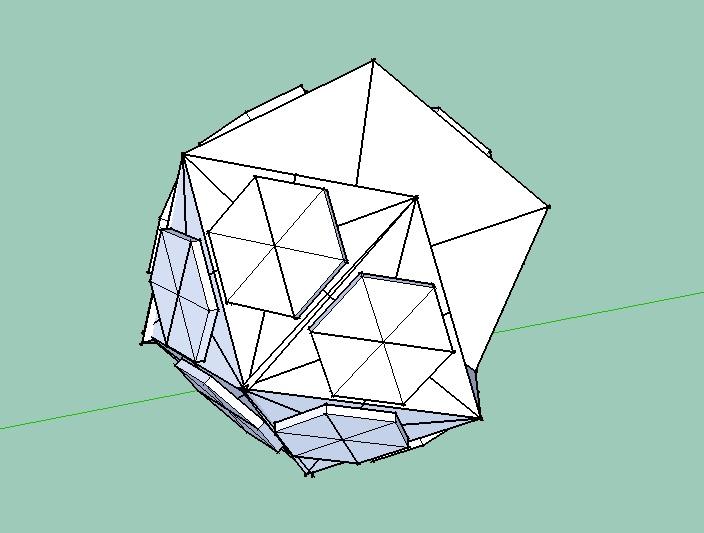
So the most challenging part of this whole project obviously is to construct and build an icosahedral housing for twenty loudspeaker. I really wasn’t sure, if I would be capable of this task. Icosahedrons are 20-sided platonic solids, like a pyramid (tetrahedron, 4-sided), cube (6-sided) or a dodecahedron (12-sided). Even though it seems to be a regular object, every dimension in it is pretty weird and totally counterintuitive.
The easiest way seemed to be, to build one case, with twenty equilateral (gleichseitige) triangle outside faces. So only one shared interior space for all speakers. Most dodecahedral speakers are build this way, because they are used for room acoustic measurements and are basically mono. For twenty independent channel, I figured, I would need twenty separated spaces in order not to have a crazy wonky unpredictable frequency response (though I’m quite sure sonible’s IKO is not having separated spaces, but I haven’t asked yet). In the end I’m really not that much of an acoustic engineer, so it’s all trial and error (I also just was too lazy to go through the theoretic parts).
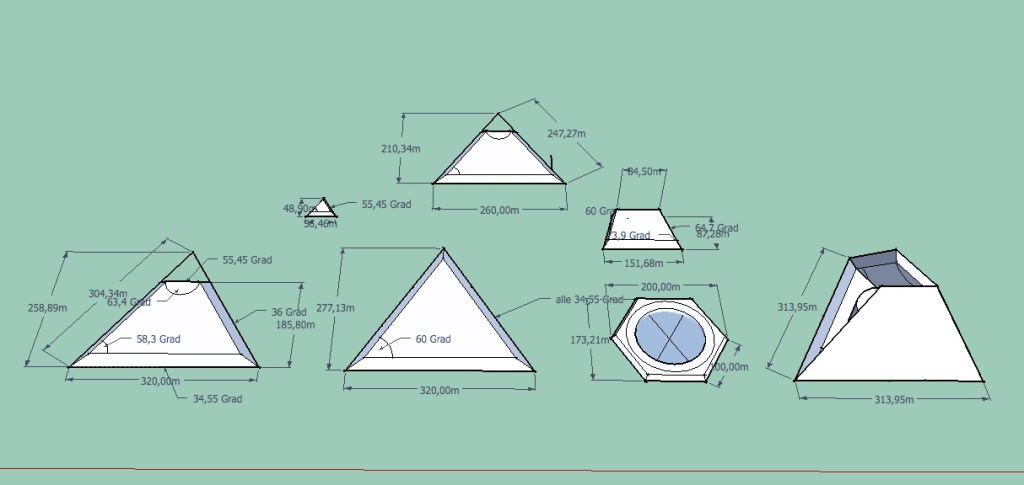
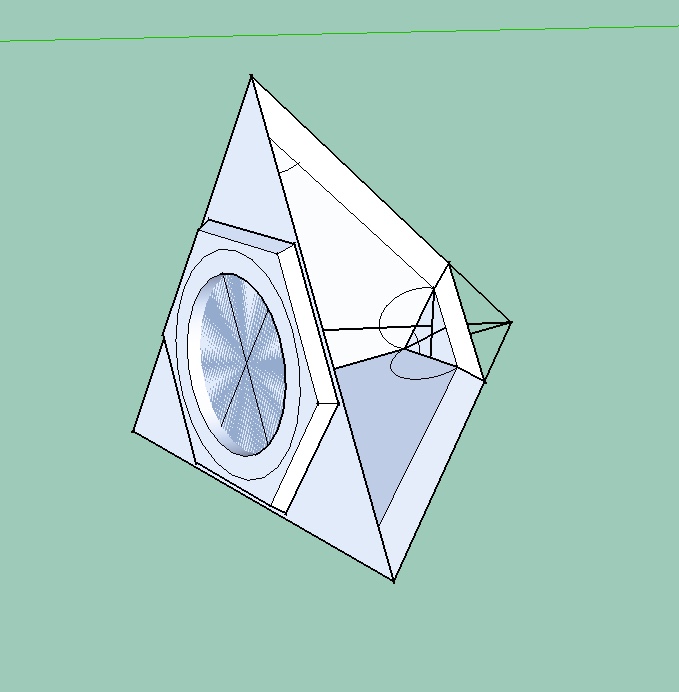
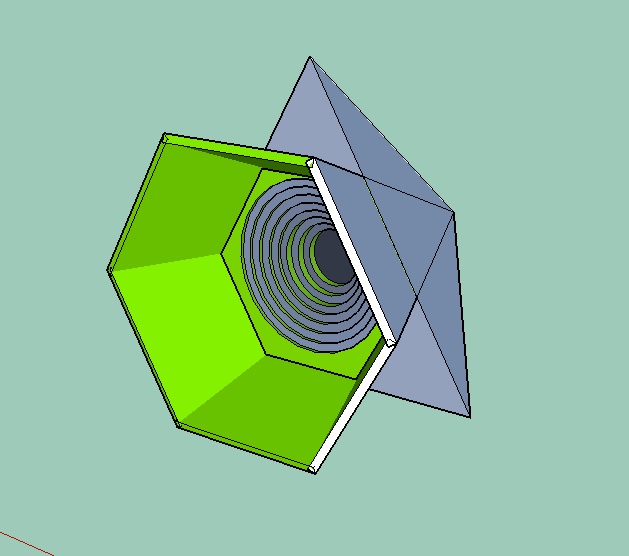
So I quickly had the idea, to build a modular system of speaker, that can be mounted to be one icosahedral speaker. This had a lot of advantages: it was definitely easier to build (because I now only needed to build pyramid cases in the right dimensions), it would be much easier to transport (especially in the dimensions I originally had planned) and in case, this whole #icospeakerproject fails or just isn’t that interesting, I still would have 20 speakers I could do cool stuff with.
In the end, it took me nearly a month of on-and-off work, to figure out all the dimensions, angles and parts. I used the open source software SketchUp for 3D planning, which is easy to learn but difficult to handle in detail. But in the end it worked out and I had a couple of different designs. This already was a major achievement!

 fritsch music